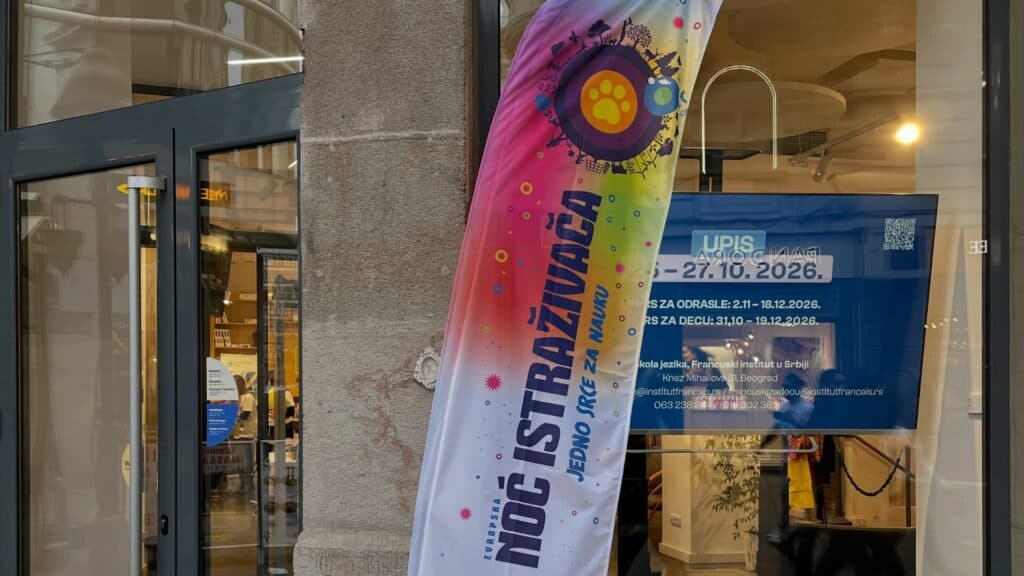
The Institute for Medical Research co-organized this year’s European Researchers’ Night, held on September 25 as part of the HEART project. Under the theme “One Heart for Science,” the program brought researchers and the public together to explore the One Health approach, which recognizes human, animal, and environmental health as deeply interconnected.
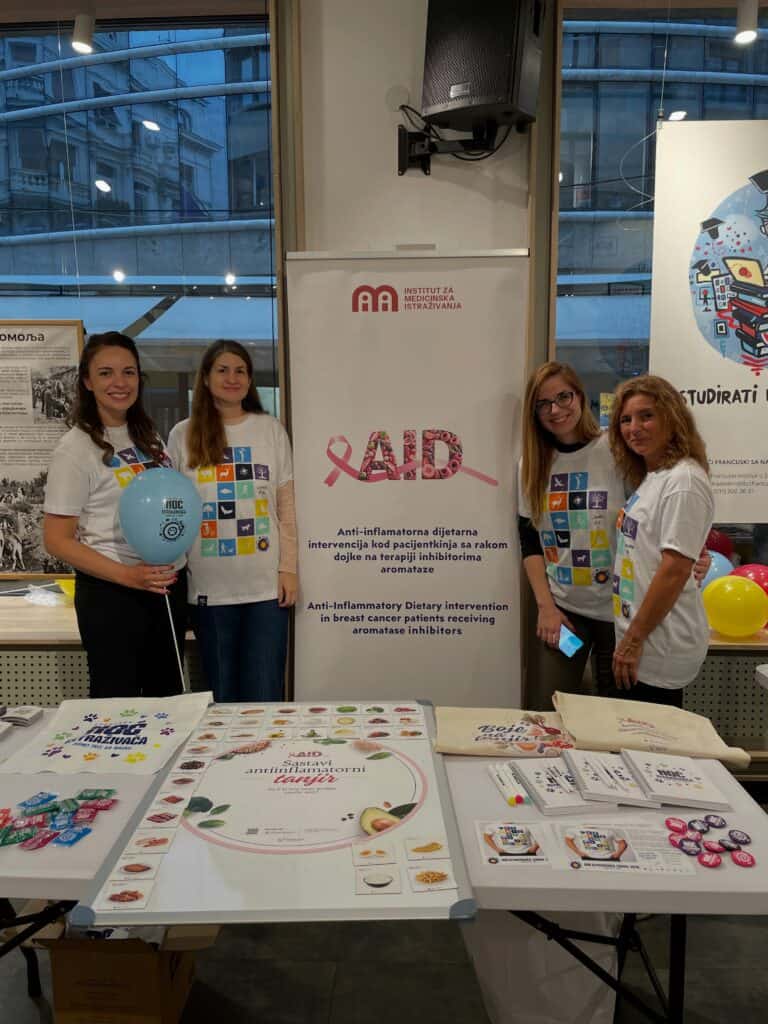
Through two interactive exhibits focused on ticks and nutrition, we aimed to show how scientific evidence translates into everyday decisions, from preventing vector-borne diseases to making informed food choices.

At the tick exhibit, visitors examined tick anatomy and life stages under a stereomicroscope and spoke with IMR researchers about common attachment sites, safe removal, and evidence-based measures for reducing the risk of tick bites and tick-borne infections. Younger visitors approached the topic through play, creating ticks from modeling clay, learning about their key characteristics, and using a memory game to discover other vectors and the diseases they transmit.

The nutrition exhibit asked a simple but important question: how much of what we choose to eat is actually evidence-based? Through the “Myth or Fact” quiz and conversations with researchers, visitors tested their knowledge, separated scientific evidence from common misconceptions, and built their own balanced meal in the interactive activity “Would Your Plate Pass the Science Test?”
The official opening was also attended by Emerita Soliño Piñeiro from the European Research Executive Agency (REA), who highlighted the importance of the HEART project, European support for young talent and research careers, and the wider role of connecting science with society.
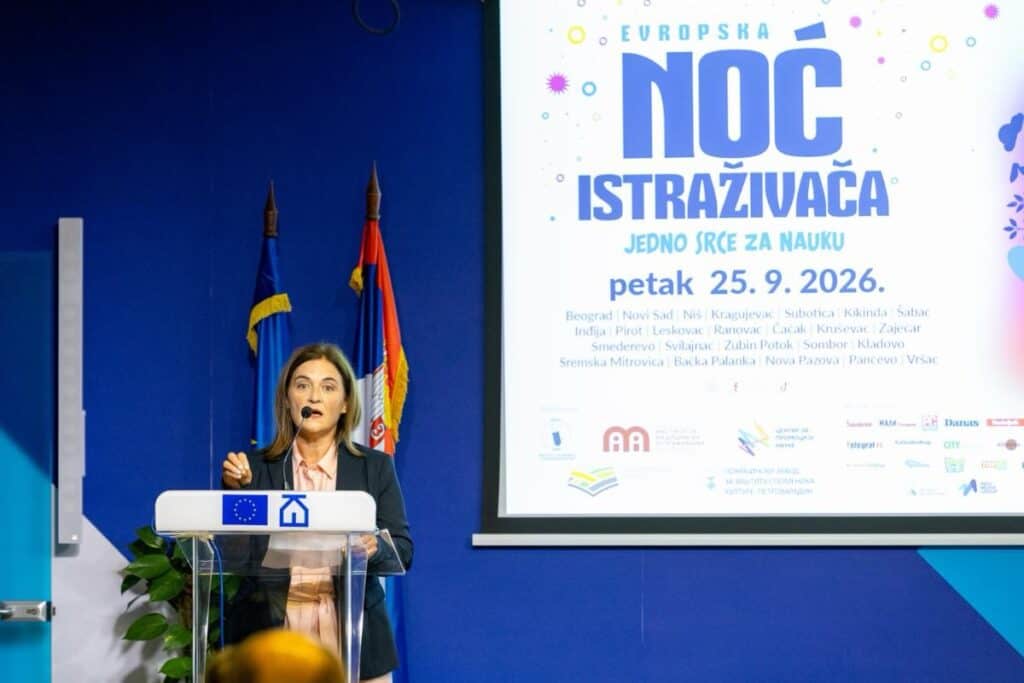
IMR is a partner in the HEART project, coordinated by the Institute for the Application of Nuclear Energy (INEP) in collaboration with the Center for the Promotion of Science, the Faculty of Agriculture in Novi Sad, and the Provincial Institute for the Protection of Cultural Monuments. The project is funded by the European Union through Horizon Europe under the Marie Skłodowska-Curie Actions (MSCA).